
What are the Possible Side Effects of Dental Implants? to learn long term and short term side effects of implant visit our page.
Dental Implant Procedure and Types of Implant
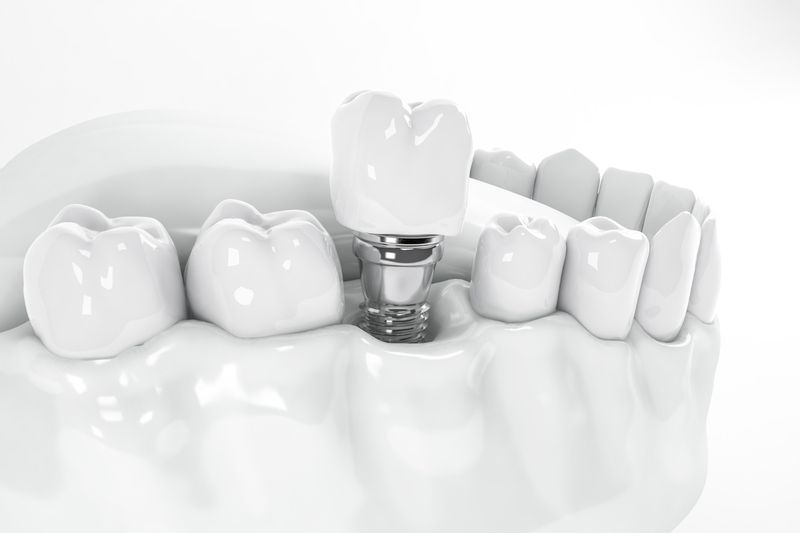
Implants are artificial tooth roots made of pure titanium and designed in different shapes, lengths and angles. With the development of technology, zirconium alloy with high biocompatibility has recently been applied to titanium implants.
Implant Types
There are three different types of implants: endosteal, subperiosteal, and zygomatic.
Endosteal Implants
Endosteal implants are short implants that are placed on the solid bone. This is the type of implant that is most commonly used.
Subperiosteal Implants
Subperiosteal implants are implants placed on a metal frame under the gingiva. These types of implants are not preferred because bone augmentation surgery is needed for the application.
Zygomatic Implants
Zygomatic implants are particularly suitable for patients with maxillary resorption. However, because these implants are long, they require more surgical intervention.
Implant Procedures
Although the application of implants requires the same procedures, there are different application areas of use.
Single Tooth Implant
The use of single implants is appropriate when only one tooth is lost.
Full Mouth Dental Implant
Full Mouth Dental Implant is typically applied by making bridge applications between eight and ten implants. Since it involves too many implants, it is a relatively difficult treatment.
All on Four Implants
All-on For 4 implants are applied at 45-degree angles on the strongest bones on the jawbone, and a single-piece fixed prosthesis is placed on these implants. It is a modern method that significantly reduces the operation time and recovery time.
All on 4 dental implants problems can be evaluated within the scope of dental implants.